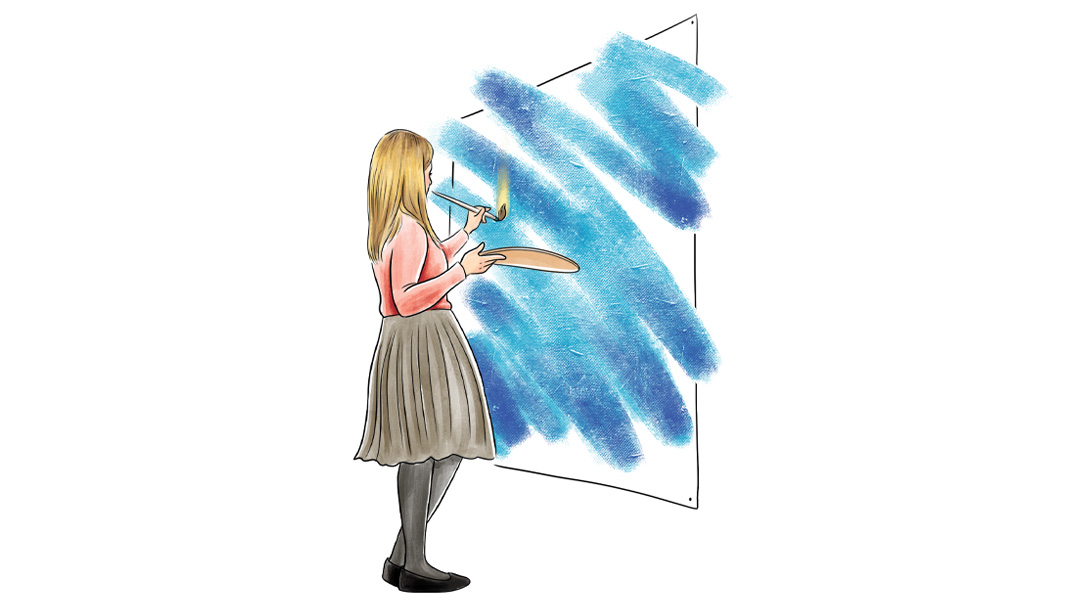
The first thing that struck me wasn’t the melody. It was the pause. That tiny, stunned silence after Scott Mills asked Taylor Swift if The Life of a Showgirl would be her “last album” now that she’s engaged. You could almost hear the world tilt for a second, as if the air in the studio went still. Then her soft, incredulous laugh “What? No…” sliced through it. I’ve replayed that clip more times than I’d like to admit, not because of what she said, but because of what that pause revealed: how deeply conditioned we are to see a woman’s ambition as something fragile, temporary, conditional upon her marital status.
It’s 2025, and somehow we still haven’t outgrown the idea that a woman’s success must come with an expiration date. The moment she speaks of love, of commitment, of family, the world begins its quiet countdown — waiting for the pivot, the retreat, the so-called “softening.” We don’t even realize how reflexive it’s become. The question hides behind politeness, curiosity, tradition. But at its core, it still asks: can she really want both?
I think about that often – how invisible these expectations are until someone names them. A colleague once told me, almost in passing, “You won’t have this kind of drive once you start a family.” He said it the way people mention the weather..with certainty, not malice. I laughed it off then, but it stayed with me. It wasn’t a prediction about my work ethic. It was a quiet assertion about my gender – an assumption that my ambition was a phase, something to be traded in for domestic harmony when the time came.
Growing up, I saw the same story play out in quieter ways. The women around me were brilliant and unstoppable until life “happened.” That’s how people phrased it, as if life were an accident one stumbled into. I used to sketch designs late into the night already folded that dream away. My aunt, who once ran a small boutique, sold it when her husband’s career took them overseas. I don’t think they ever stopped wanting more, but they learned early that wanting too much was somehow unbecoming.
We inherit that script before we even know we’re reading it. Somewhere between the fairy tales and the pep talks, we’re told we can be anything..as long as we’re not too much of something else. Be ambitious, but not intimidating. Be nurturing, but not distracted. Be successful, but not so successful that it threatens the balance of things. It’s a delicate choreography that women learn to perform almost instinctively, even as we resent it.
So when Taylor answered, “That’s not why people get married so they can quit their job,” I felt something in me unclench. It wasn’t just about her; it was about every woman who’s ever had her drive mistaken for a temporary phase. Every woman who’s been asked how she’ll “manage it all,” while her male counterparts are simply applauded for “doing it all.” Every woman who’s been told her milestones — marriage, motherhood are endings rather than expansions.
I remember when a friend announced her pregnancy at work last year. The congratulations were warm, but underneath the smiles, I caught the glances.. the silent recalculations about her future on the team. “She’s probably not going to push for that next role,” someone whispered later. It wasn’t cruel; it was casual, which somehow made it worse. Ambition, it seems, becomes negotiable once a woman’s life starts to include others.
But what if it isn’t? What if love and ambition don’t sit on opposite ends of the scale? What if they’re both expressions of the same human longing to create, to connect, to matter?
When I think about the women who’ve shaped me, I don’t see a pattern of sacrifice; I see reinvention. I see women who have rewritten what ambition looks like sometimes quietly, sometimes with fire. My mentor, who started her second business at forty-two, the same year her daughter started high school. My friend, who codes at 3 a.m. while her twins sleep, not because she has to prove anything but because ideas won’t let her rest. My cousin, who walked away from a “stable” job to build something that carries her name. None of them fit the tidy narrative of what women “should” do after a certain age or milestone. And yet, there they are – thriving, unfinished, alive.
Ambition, for women, has never been just about career ladders or paychecks. It’s about presence. It’s the act of refusing to shrink in a world that constantly tells us to. It’s saying yes to both — to the conference room and the nursery, to the late-night brainstorm and the slow Sunday morning, to creation in all its forms.
Sometimes I think about how quietly men are allowed to be both. No one asks a male artist if fatherhood will make his songs less raw. No one wonders whether a CEO’s wedding will dilute his focus. But when it’s a woman, the world perks up, measuring, assessing, waiting for signs of drift. The scrutiny is relentless and, in its own way, exhausting.
I’ve lost count of how many interviews I’ve read where successful women are asked about “work-life balance.” I can’t remember a single one where a man was asked the same question with the same weight of moral judgment. We’ve normalized the idea that women must justify their ambition, frame it in context, soften it with apologies.
But the truth is simpler. Ambition isn’t a switch you flip on or off based on marital status. It’s a current that runs beneath everything you do – steady, personal, enduring.
I think about that on quiet evenings, when the world feels slower and the day’s noise fades. Sometimes I catch myself imagining the future: the home I might build, the people I might share it with, the work I still want to do. And in those moments, I feel no contradiction. The same energy that drives me to write, to create, to build, is the one that makes me yearn for love and belonging. They don’t compete; they coexist.
There’s a tenderness in that realization – that we don’t have to fragment ourselves to fit someone else’s idea of balance. For so long, women have been taught to compartmentalize: the professional self, the domestic self, the creative self, the mother, the partner, the dreamer. But maybe wholeness comes from letting those selves talk to each other, instead of taking turns.
When Taylor called the question “shockingly offensive,” I don’t think she was just defending herself. She was defending the idea that women’s stories are still being flattened into caricatures. The successful woman who loses herself in love. The wife who gives up her art. The mother who stops dreaming beyond her children. These are old myths, worn smooth by repetition, but they still linger like dust on the edges of progress.
And yet, quietly, steadily, women keep rewriting the ending.
I see it everywhere – in the startup founder who brings her toddler to pitch meetings, in the novelist who publishes her debut at fifty, in the teacher who launches a side business that blossoms into something extraordinary. Each story, however ordinary, chips away at the notion that ambition has an expiration date.
I think about the phrase “The Life of a Showgirl.” It’s ironic, isn’t it? That a showgirl — someone constantly seen, scrutinized, objectified – might be the perfect metaphor for this conversation. The world loves to watch her perform but grows uneasy when she owns the stage. When she begins to direct her own act, write her own lines, we call it arrogance or rebellion. But perhaps that’s exactly what evolution looks like – a woman refusing to play the role she didn’t audition for.
There’s a scene in an old documentary I once watched – a ballerina in her sixties practicing alone in a studio. Her hair was silver, her joints slower, but her eyes were bright, alive with the same spark as when she was twenty. The filmmaker asked why she still danced when she could have retired decades ago. She smiled and said, “Because I still have music inside me.”
That, I think, is the simplest truth about ambition. It’s not about proving something to the world. It’s about honoring the rhythm that lives inside you – whether that rhythm beats in a boardroom, a nursery, a stage, or a studio.
Some days, I wish we talked more about that – about ambition as art, not competition. About creation as nourishment, not ego. About how marriage and motherhood can expand a woman’s sense of purpose, not erase it. There’s beauty in that complexity, if only we’d stop trying to simplify it.
I once read a line that stayed with me: A woman becomes herself the day she stops apologizing for it. I think of that when I see headlines questioning whether Swift’s engagement means the end of her music. I think of that when people ask working mothers how they “manage it all,” as if the act of living fully requires an explanation. And I think of that when I look at my own reflection – a woman still figuring it out, still ambitious, still hungry for both success and softness.
Because maybe that’s the quiet revolution of our time: women refusing to choose.
Not because we want it all in some glossy, impossible sense, but because we finally understand that ambition doesn’t demand the absence of love – it thrives alongside it.
When I imagine the years ahead, I don’t see my drive dimming with marriage or motherhood; I see it evolving. I see it infused with new meanings, shaped by new responsibilities, deepened by empathy. I see it becoming less about climbing and more about creating – spaces, stories, legacies.
The irony is that the world’s fear of women “losing ambition” after love reveals something else entirely – its discomfort with women defining success on their own terms. Ambition that bends, shifts, and endures is harder to control, harder to label. It belongs entirely to the woman herself.
Maybe one day, an interviewer will ask a married woman about her next big dream without assuming it’s her last. Maybe one day, ambition will no longer be treated as a phase but as a pulse – something that beats quietly beneath every version of who she becomes.
Until then, we’ll keep saying it out loud:
Women don’t stop being ambitious when they fall in love.
They don’t stop dreaming when they start a family.
They don’t stop creating just because the world expects them to pause.
We contain multitudes – fierce, tender, brilliant contradictions.
And maybe the truest act of rebellion is to live all of them, unapologetically.